
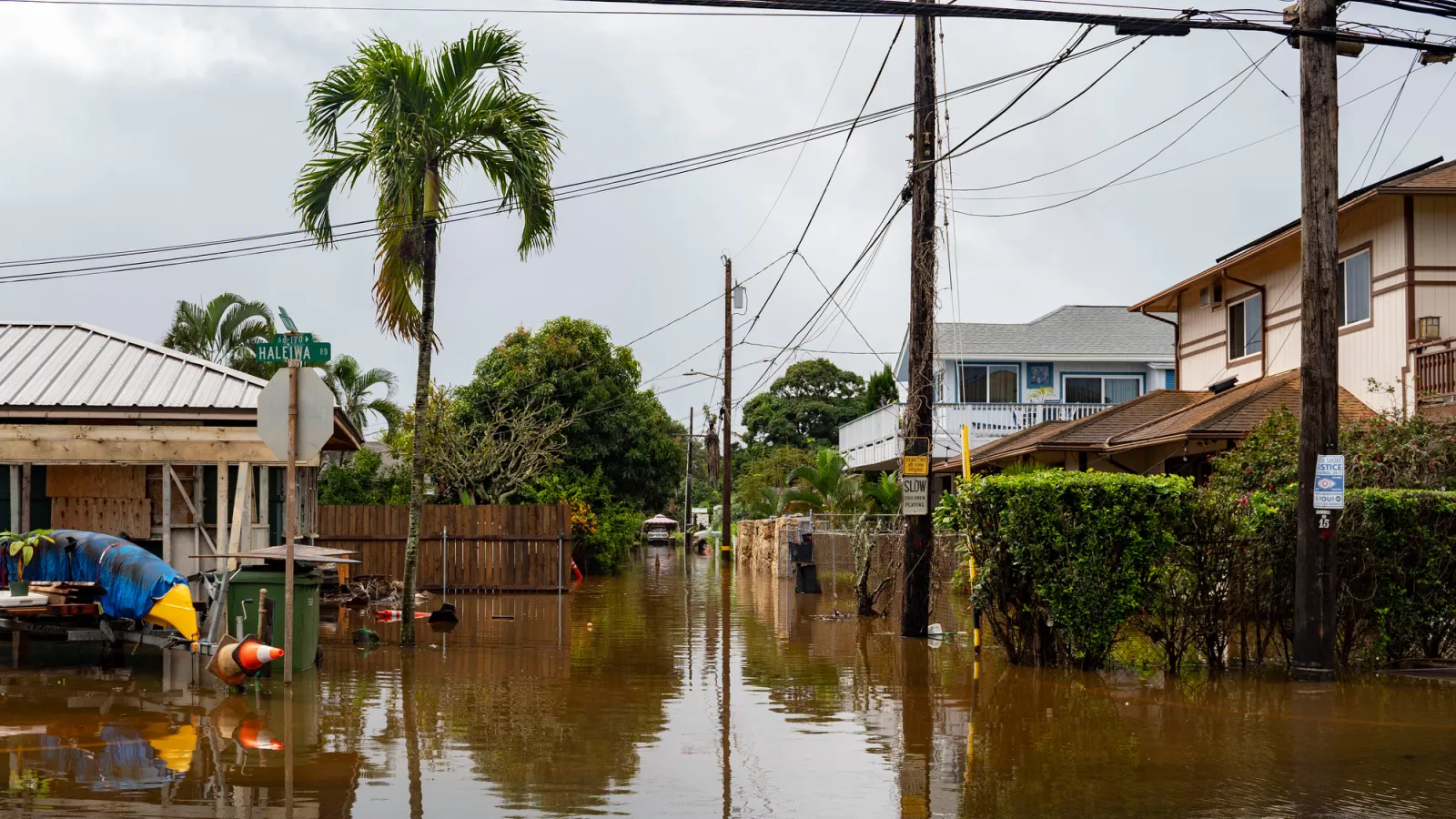

Hawaii’s March 2026 flooding became one of the state’s most serious flood events in years. AP reported that the storms were the worst flooding to hit Hawaii in two decades, with homes pushed off foundations, cars swept from driveways, widespread mud damage, and more than 230 rescues on Oahu. Officials also warned that losses could exceed $1 billion.
This is why the story still matters now. The flooding was not limited to one road or one neighborhood. It exposed how quickly runoff, drainage failures, saturated ground, and infrastructure pressure can turn heavy rain into a much larger housing and community problem. FEMA later confirmed a major disaster declaration for flooding, landslides, and mudslides that occurred March 10–24, 2026 in Honolulu County, Hawaiʻi County, and Maui County.
How severe the flooding was
The damage across Oahu was especially striking. AP reported that floodwaters swept homes off their foundations, floated vehicles away, coated interiors with thick red mud, and forced evacuations in areas including the North Shore. Around 5,500 residents were ordered to evacuate because of flood danger and concerns around the Wahiawa Dam, while roughly 10 people were hospitalized for hypothermia.
The impacts went beyond immediate flooding. AP also reported that more than 2,000 people were without power on March 22, 2026, and that a boil water notice remained in effect for parts of Oahu’s North Shore after the storm. Those details matter because flood recovery is not only about removing water. It also affects utilities, drinking water, access, and whether homeowners can safely return.
Another AP report from March 24 described a separate surprise downpour near downtown Honolulu that sent floodwaters through a neighborhood near Mānoa, showing that the danger was not over after the first wave of flooding. Crews were still evaluating damage while back-to-back storms continued to hit the state.
Why drainage and runoff became such a big issue
One of the clearest lessons from Hawaii is that flooding is not just about rainfall totals. It is also about where the water goes once the ground is saturated.
Back-to-back Kona low systems hit the islands in March, and AP reported that the storms drove fast-moving floodwater through homes, roads, and communities already under pressure. In places like Oahu’s North Shore, floodwater and mud moved with enough force to shift homes, damage interiors, and trap residents. That points directly to the role of runoff, drainage paths, overwhelmed channels, and local infrastructure capacity.
The dam threat added to that pressure. During the flooding, officials warned that the aging Wahiawa Dam had reached a dangerous condition, prompting evacuation concerns for thousands of residents. Even though the immediate worst-case failure did not happen, the episode showed how quickly flood risk can expand when drainage systems, detention areas, or older infrastructure are pushed beyond normal limits.
That does not mean drainage alone caused the disaster. But it does show that in a high-rain event, poor runoff control, saturated land, blocked flow paths, weak culvert performance, or stressed water-control infrastructure can make damage much worse. That is an inference based on the flooding impacts, the dam warnings, and the repeated storm pattern documented in news and official reports.
What changed after the disaster
The flooding quickly moved from a weather story to a recovery and aid story.
On April 15, 2026, FEMA announced that the President approved a major disaster declaration for Hawaii covering the March 10–24 storms. The declaration made federal help available for affected households in the City and County of Honolulu, Hawaiʻi County, and Maui County. The Governor’s office separately confirmed the declaration and said it would support both response and early recovery efforts.
The State of Hawaii also set up recovery support tied to the March storms, including disaster case management information through Hawaii Emergency Management Agency channels. By April 20, local recovery reporting noted that FEMA assistance was open to impacted residents in Maui, Hawaiʻi, and Honolulu counties.
That matters because large floods do not end when the rain stops. Once homes, roads, utilities, and drainage systems are damaged, the recovery phase becomes its own long-term problem.
What homeowners can learn from Hawaii’s flooding
The biggest lesson is that serious flood risk is not limited to the mainland, coastal storm surge, or hurricane landfalls. Flash flooding and runoff-driven damage can hit fast when repeated storms saturate the ground and overwhelm local systems.
For homeowners, drainage deserves more attention than it usually gets. Water needs a safe place to move. When ditches, swales, culverts, grading, retaining systems, and runoff paths are inadequate, flood damage can spread well beyond the first point of overflow. Hawaii’s March flooding showed how quickly water and mud can turn into structural and interior damage when those systems are overwhelmed. That is an inference drawn from the reported home displacement, mud damage, neighborhood flooding, and infrastructure stress.
It is also a reminder to review the basics before storm season. Homeowners should know how water drains across their lot, whether nearby channels or roads flood easily, whether they are near old or high-risk infrastructure, and whether they have a plan if access roads are cut off. They should also understand what their insurance does and does not cover in a flood event. FEMA’s disaster declaration itself underscores how widespread and costly those gaps can become after a major storm.
Why this story still matters now
Hawaii’s March 2026 flooding is a useful warning because it connects climate risk to something very practical: water movement. Heavy rain becomes much more dangerous when runoff has nowhere to go, neighborhoods sit in vulnerable paths, or infrastructure is already under stress.
For homeowners in any flood-prone area, the takeaway is not just that big storms happen. It is that small weak points in drainage, grading, channel capacity, and local emergency planning can become major losses very quickly. Hawaii’s flooding made that visible in real time.
How Get Climate Ready Helps
Stories like Hawaii’s March flooding show why climate risk planning cannot start after the water is already inside the house.
Get Climate Ready helps homeowners, buyers, and communities take earlier steps by understanding flood exposure, reviewing practical resilience improvements, and making smarter decisions about where and how to live. That includes looking at risk patterns, comparing locations, and identifying upgrades that may reduce damage when heavy rain and runoff hit.
Whether you are reviewing a flood-prone property, thinking about drainage improvements, or trying to understand long-term climate risk before you buy, Get Climate Ready gives you a better place to start.
Final takeaway
Hawaii’s March 2026 flooding was not just a severe weather event. It was a reminder that water causes the most damage when drainage, infrastructure, and preparedness fall behind the risk. The lesson is simple: know how water moves around your property, know where your weak points are, and prepare before the next storm arrives.

